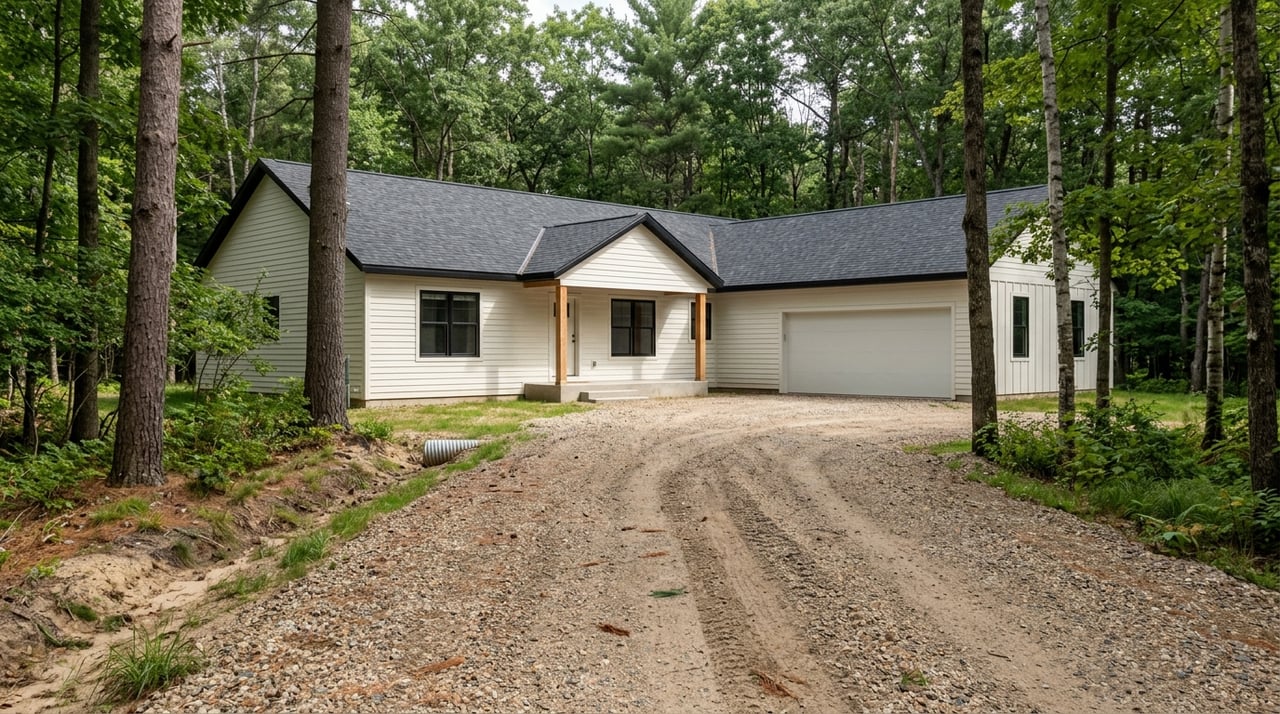
Buying acreage feels simple until you start asking one question: Can you actually build on it? If you are looking at land in Fruitland Township, that question matters more than price per acre or road frontage alone. The good news is that a buildable path often exists, but it usually comes down to zoning, access, utilities, soils, and permit timing. Let’s walk through what matters before you go from raw land to a new build.
Why buildability is not just about parcel size
In Fruitland Township, acreage is only the starting point. The township’s zoning framework includes districts and overlays such as Rural Residential, Agricultural Overlay, Low Density Residential, Medium Density Residential, shoreline and inland lake districts, and floodplain management.
That means two parcels with similar size can have very different build potential. Before you make assumptions, you need to confirm the exact zoning district and any overlays that apply to the property.
Fruitland Township planning shapes your options
Fruitland Township’s planning materials put a strong focus on rural character, natural resource protection, and low-density growth. The township’s master plan also highlights wetlands, shoreline areas, dune lands, woodlots, high-water-table areas, and natural drainage ways as sensitive features that should be respected.
For you as a buyer, that means the land itself needs a closer look. A wooded or scenic parcel may still come with development limits that affect where a home, driveway, septic field, or outbuildings can go.
Zoning and overlays to check first
Before you think about home design, talk through the property’s zoning and map layers. Fruitland provides planning maps for flood zones, parcel size, soil types, watersheds, wetlands, and environmental concerns.
A good early review should answer questions like these:
- What zoning district is the parcel in?
- Are there floodplain, shoreline, lake, or environmental overlays?
- Is the parcel part of a recent or proposed land division?
- Are there setback limits tied to roads, water features, or lot lines?
- Could a private street be required for access?
This early step helps you avoid paying for surveys, plans, or loan costs before you know the land is a realistic fit.
Water and sewer may not be available
One of the biggest surprises for acreage buyers is utility service. Fruitland Township’s master plan says public water and sanitary sewer expansion is phased and generally tied to planned service areas, with further expansion envisioned along the Whitehall Road corridor.
In many rural residential areas, public water and sewer are not planned. In practical terms, that means your build may depend on whether the site can support a private well and septic system.
Why soils and septic matter so much
If the property is not served by public utilities, soil conditions become a major part of the decision. Muskegon County Environmental Health performs vacant-land evaluations by reviewing wetlands and soil information and by physically evaluating the site for well and on-site sewage suitability.
This matters because a parcel can look great on the surface and still have limits below ground. If soils, drainage, or wet conditions create problems, your building area or septic placement could become much more complicated.
Access can make or break a build
Legal and practical access is another key checkpoint. If your parcel has frontage on a county road, the Muskegon County Road Commission requires a driveway permit and reviews the proposed driveway for sight distance, drainage, and safety before issuing approval.
If the parcel is being split, road access should be reviewed early. The Road Commission’s land-division access review is meant to confirm that future driveway locations are workable before a survey is finalized.
Private street access needs extra planning
Some acreage deals involve access from a new private street instead of direct county-road frontage. In Fruitland Township, a private-street application requires a maintenance-and-operation agreement and a site plan prepared by an engineer or land surveyor.
That is important because private-road access is not something you figure out later. It needs to be part of your feasibility plan from the beginning.
The site plan is a big deal
Fruitland Township requires a zoning compliance application before a building permit. The township’s new-construction checklist says your site plan needs to show parcel dimensions, setbacks, existing and proposed structures, road right-of-way, and distances to shorelines, creeks, drains, ponds, or natural waterways.
The site plan also needs basics like the address, parcel number, and north arrow. If you are planning a larger home over 3,500 square feet, engineer-stamped drawings are required.
Environmental review can add steps
If the parcel is near wetlands, dunes, lakes, streams, or flood-sensitive areas, extra review may be needed. Fruitland’s planning materials and master plan both point to wetlands, watersheds, flood concerns, and natural drainage as issues that need careful attention.
At the state level, EGLE may require permits for work in regulated wetlands or critical dune areas. In those locations, activities like building a house, garage, road, driveway, or septic system can trigger additional review.
Earth change rules can apply early
Even before construction really gets moving, site work can require approval. Muskegon County Public Works administers soil erosion and sedimentation control under Part 91.
If your project disturbs one acre or more, or if it is within 500 feet of a lake or stream, an earth-change permit is required before work begins. Depending on the property, other state reviews may also come into play.
A practical approval sequence for Fruitland Township
One of the easiest ways to reduce surprises is to follow the process in the right order. In Fruitland Township, zoning approval comes before the building permit, and final site-plan approval can be conditioned on other township, county, state, or federal permits.
A practical sequence often looks like this:
- Confirm zoning district and overlays.
- Verify legal access and driveway strategy.
- Check public utility availability or private well and septic feasibility.
- Order vacant-land evaluations when needed.
- Start land-division and road-access review early if the parcel is being split.
- Submit the township zoning compliance application.
- Obtain the building permit and schedule inspections.
This order helps you spend money where it counts and avoid skipping over a key approval.
Land divisions need careful documentation
If your plan involves splitting acreage before building, expect more documentation. Fruitland Township requires a sealed survey and complete legal descriptions for land divisions.
That means a surveyor is often part of the process early on. Waiting too long to bring one in can slow down access review, parcel approval, and your eventual construction timeline.
Financing land and new construction takes planning
Acreage purchases often need a different financing conversation than a standard home purchase. Construction loans are usually short-term, fund the build in stages, and often carry a higher interest rate than a traditional long-term mortgage.
That makes early lender conversations especially important if you plan to buy the land first and build later. Properties with more than 10 acres or other non-standard features can also be harder to finance through some conventional loan programs.
Title work matters more than many buyers expect
With vacant land, title review deserves extra attention. You want to understand access rights, legal descriptions, and whether anything in the title record could affect future use of the property.
This is one of those areas where good due diligence protects you from expensive surprises later. On land deals, what looks straightforward online can be more complex once title work and surveys are reviewed.
What to watch for on wet or wooded acreage
Many buyers are drawn to parcels with mature trees, privacy, or water nearby. Those features can absolutely add appeal, but they can also affect the build area, septic layout, drainage plan, and permit path.
If a parcel is wet, heavily wooded, or near shoreline-sensitive areas, you should assume more review is needed, not less. That does not mean the deal is bad. It just means you want realistic expectations before you close.
The smartest mindset: feasibility first
The biggest takeaway in Fruitland Township is simple: acreage does not automatically equal a build site. Success usually depends on how well the parcel lines up with zoning, access, utility strategy, soil conditions, environmental review, and permit sequencing.
If you approach the process as a feasibility exercise instead of a quick land purchase, you put yourself in a much better position. That is how you move forward with more confidence and fewer surprises.
If you are weighing acreage in Fruitland Township and want a clear, no-pressure second opinion on the property, next steps, or red flags to watch for, reach out to Dylan Zuniga for a practical conversation.
FAQs
What should you check first before buying acreage in Fruitland Township?
- Start with zoning, overlays, legal access, and utility or septic feasibility before focusing on home design.
Can you build on land in Fruitland Township without public water or sewer?
- In some areas, yes, but the site still needs to support a private well and septic system based on county evaluation and township requirements.
Does a driveway in Fruitland Township need approval?
- Yes, if the parcel fronts a county road, the Muskegon County Road Commission requires a driveway permit and reviews the location for safety and drainage.
When does environmental review matter for a Fruitland Township build site?
- It becomes especially important when the parcel is near wetlands, dunes, lakes, streams, flood-sensitive areas, or other regulated natural features.
Do you need a survey for a Fruitland Township land division?
- Yes, Fruitland Township requires a sealed survey and complete legal descriptions for land divisions.
What permit comes before a building permit in Fruitland Township?
- Fruitland Township requires a zoning compliance application before the building permit process moves forward.